The same framework on every report
Every report follows the same component taxonomy and severity logic, whoever ran the inspection. Your condition data compares directly across properties and across a portfolio, instead of shifting with each author.
Professional review stays central
BIRD prepares the report draft for review. The inspector checks each assessment, edits where professional judgment requires it, and approves the final report under their own name and standards.
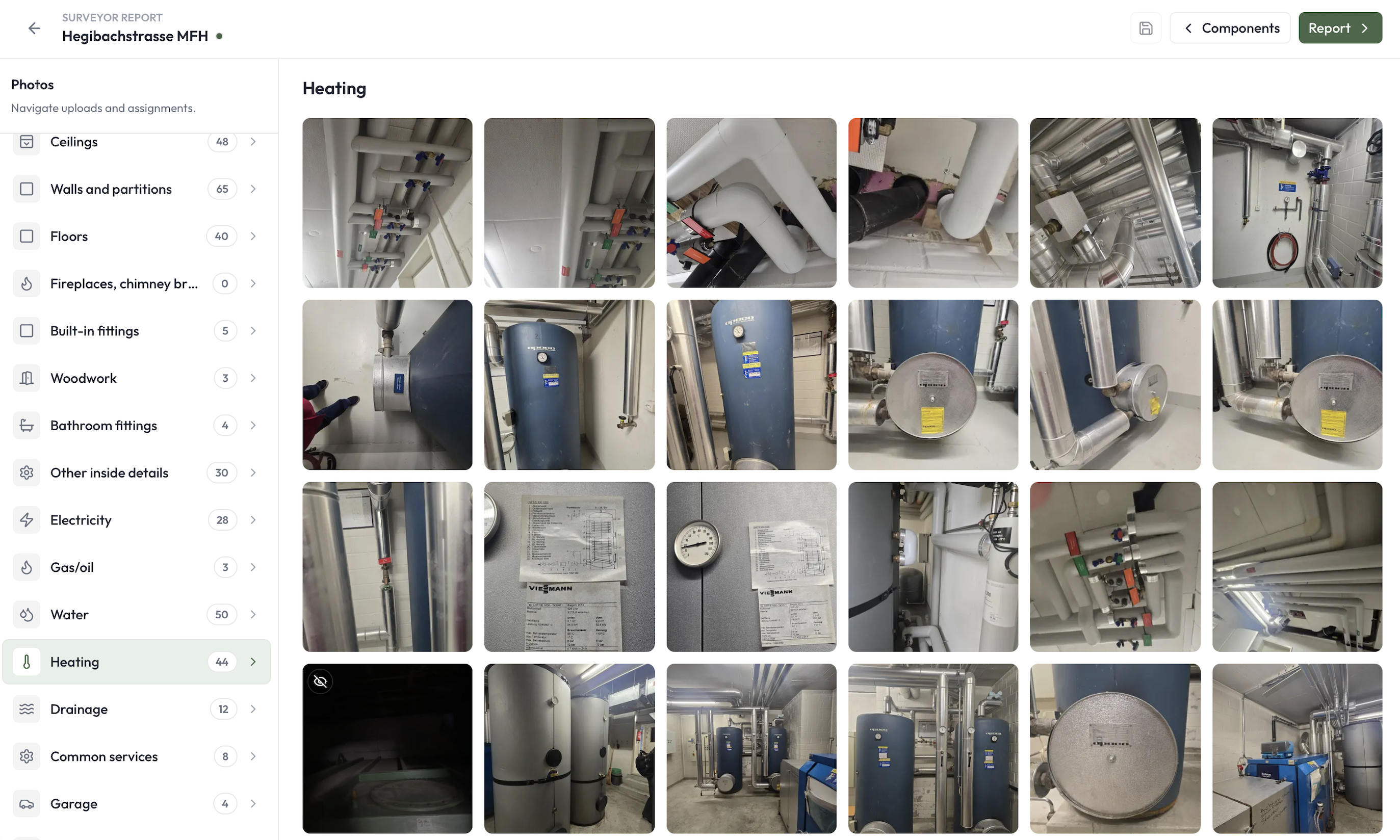
Evidence is organised by building component.
Uploaded photos are grouped around the relevant parts of the building, from heating and electrical systems to walls, drainage, and visible defects.
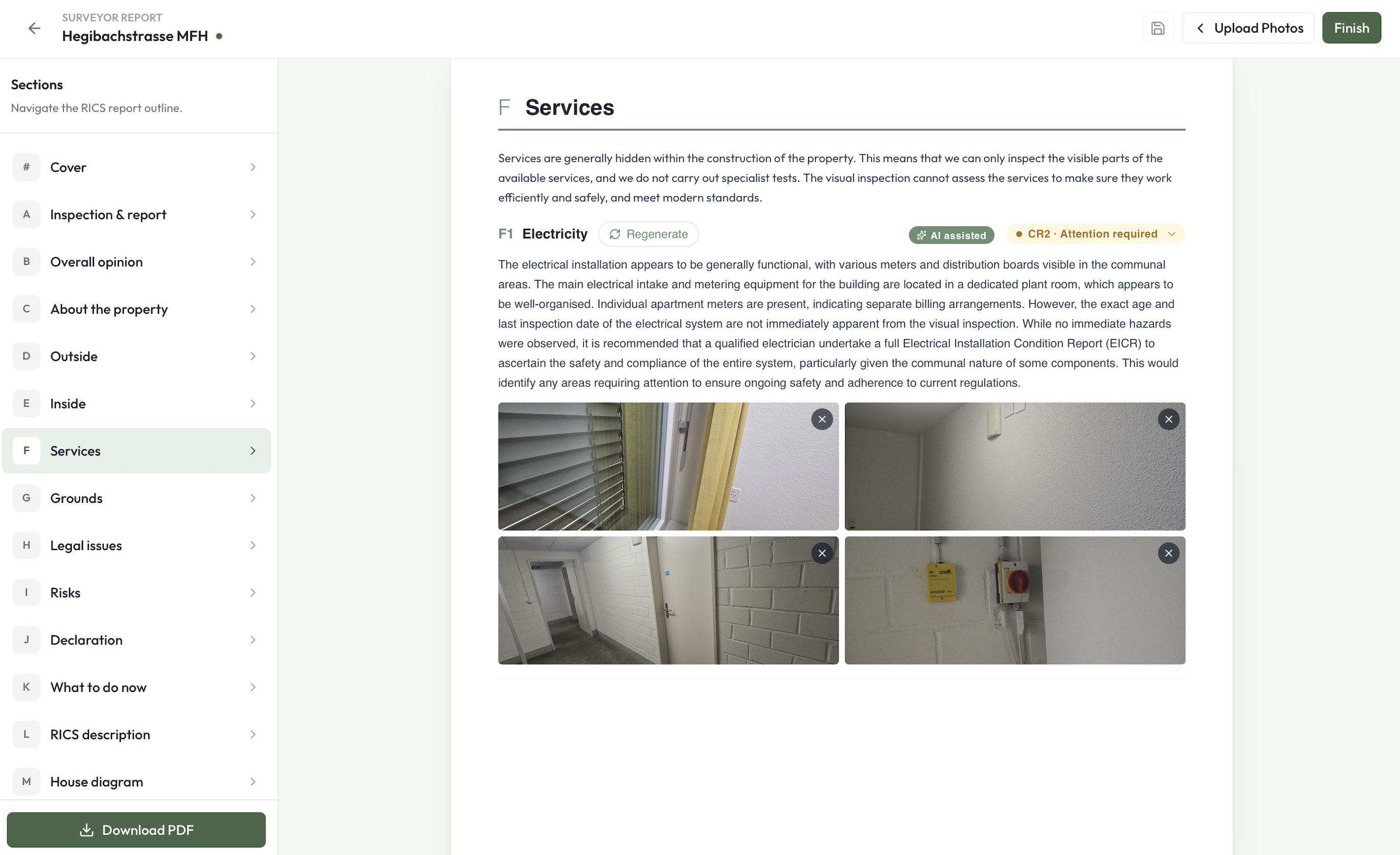
Condition ratings stay structured and comparable.
Each component can be reviewed against a consistent condition scale, so findings remain easier to audit across rooms, buildings, and portfolios.
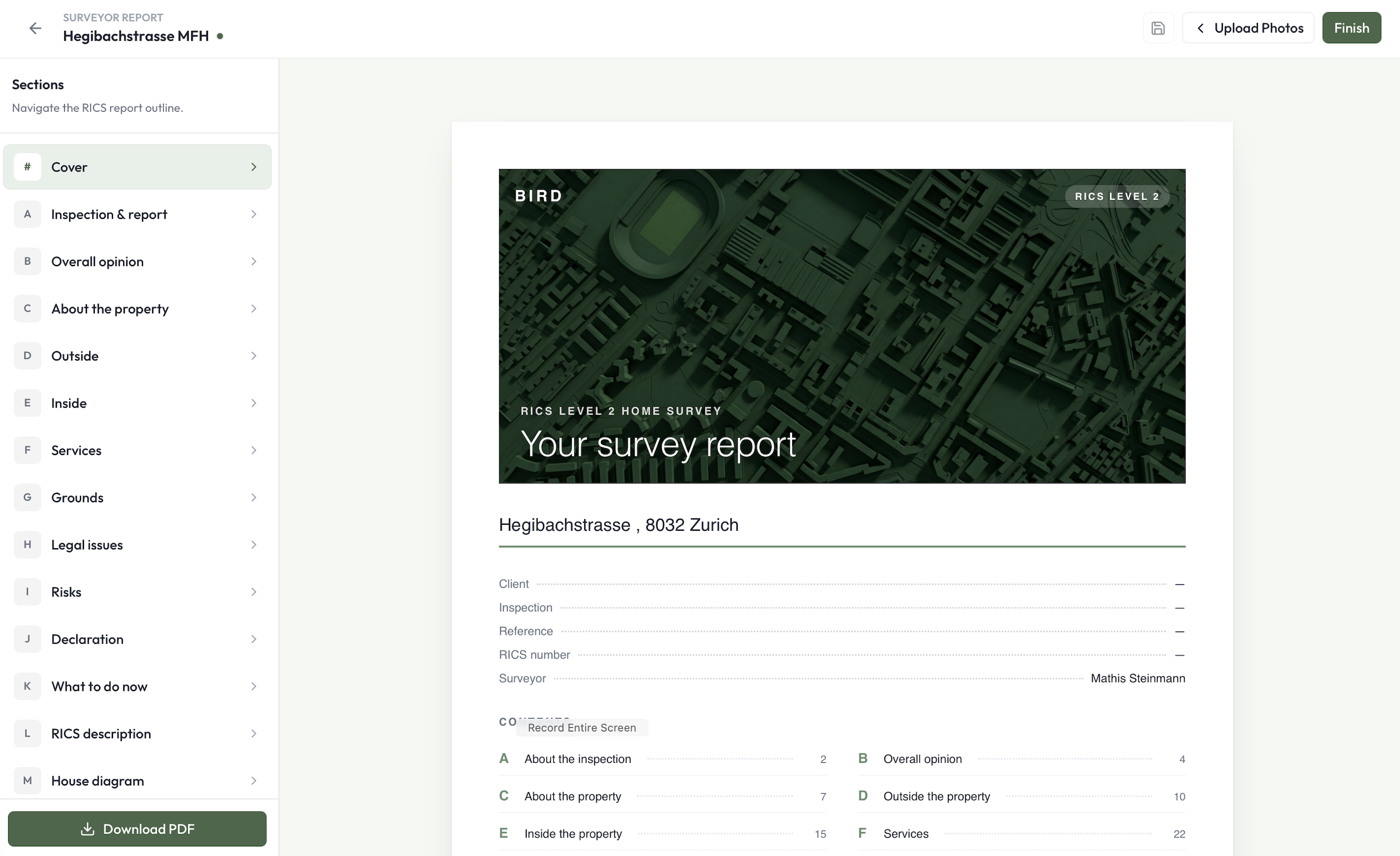
Draft sections are prepared for final review.
BIRD turns the structured evidence into report-ready sections that the inspector can edit, approve, and export as a finished PDF.
Built for the teams responsible for the final report.
BIRD supports the teams that inspect buildings, prepare condition assessments, and stand behind the final deliverable. It brings consistency to the production workflow while keeping professional review, edits, and sign-off with the people accountable for the report.
Letting agents and property managers
Handover and condition records at volume, every property in the same format, ready to review the same day.

Condition and TDD consultancies
The report is the product you sell. BIRD keeps every job in one structure, whoever ran it, so quality does not depend on who was free that week.
Technical and asset-management teams
Condition records kept to one standard across the portfolio, so every building compares directly against the next.

Consistent condition reports, produced with less manual work.
BIRD keeps every assignment aligned to the same component structure, severity logic, and report format, reducing manual production work while improving the consistency of the final assessment.
A shared structure for every report, so condition data can be compared across properties and portfolios.
Defect detection for surface-visible conditions, so less of what is visible gets missed.
Less time on the write-up, so the same team produces more without dropping the review.
From site visit to signed report in 1 to 2 days
Manual TDD reporting takes 2 to 3 weeks. BIRD drafts the write-up in minutes for review, without changing how inspectors work on site.
100 to 150 assessments per inspector per year
Traditional workflows cap capacity at 40 to 60 assessments. BIRD removes the reporting bottleneck so the same team handles significantly more without additional headcount.
Questions before a guided demo.
No. BIRD produces a structured draft from uploaded inspection documentation. The inspector reviews every assessment, edits where their judgment differs, and delivers the report under their own name.
Three free assessments before any commitment.
Start with documentation from one property. We review the workflow with you, prepare an output based on your own building, and give your team the context needed to assess the fit before committing.
Try BIRD